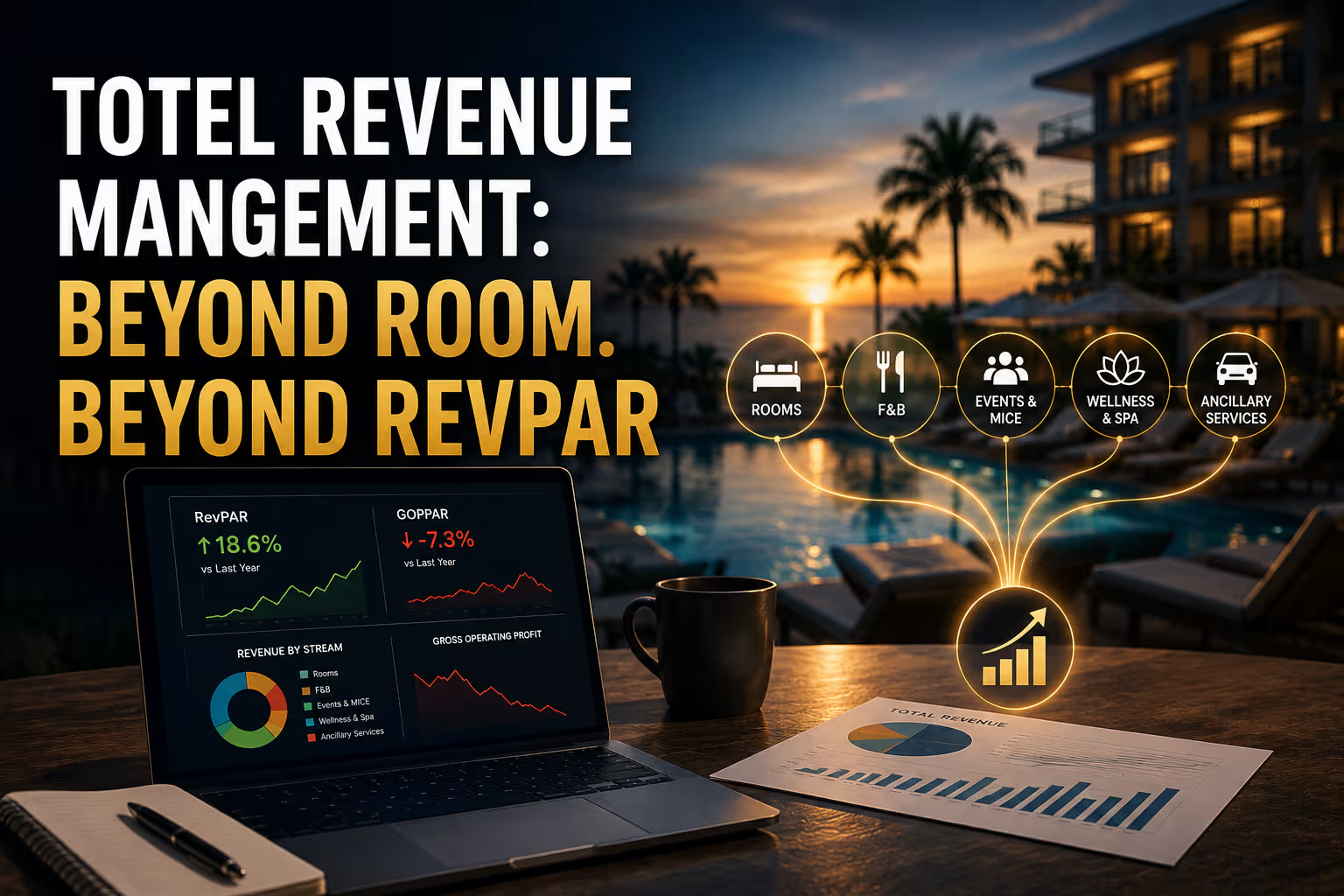


Key Takeaway: Evaluating hotel technology solely on monthly SaaS fees ignores true commercial impact. The true metric of value is Revenue Opportunity Uplift (ROU)—isolating the net profit generated by automated dynamic yielding against distribution cost savings.
Demystifying Hotel Software Commercial Models
Selecting technology for an independent hotel or resort in India requires evaluating both upfront software fees and long-term return on investment. Vendors across the hospitality ecosystem deploy three distinct pricing models:
[Hotel Tech Pricing Models]
       ├──> 1. Per-Room, Per-Month (SaaS) ──> Scalable, predictable monthly overhead
       ├──> 2. Flat-Rate Monthly Subscription ─> Fixed budget cost certainty
       └──> 3. Commission / Rev-Share (% Fee) ─> Low risk off-peak, success tax at peak
Detailed Analysis of Software Pricing Models
1. Per-Room, Per-Month (SaaS)
The standard model for modern cloud-based PMS and RMS platforms. Vendors charge a recurring fee scaled to physical inventory size (e.g., ₹150 to ₹400 per room/month).
- Pros: Highly predictable operating expenses; scales naturally with property size.
- Cons: Represents a fixed overhead cost regardless of seasonal occupancy fluctuations.
- Best For: 15–50 room independent hotels and mid-scale resorts with steady year-round demand.
2. Flat-Rate Monthly Subscription
Enterprise software suites and all-in-one platforms charge a set monthly fee regardless of inventory size or booking volume (e.g., ₹6,999/month for FlexiHotels or $500/month for enterprise modules).
- Pros: Predictable cost structure; no penalty as room count or revenue expands.
- Cons: Creates a heavy baseline financial burden for smaller properties (1–10 rooms) during off-peak periods.
- Best For: Mid-to-large properties (30+ rooms) with high transaction volumes.
3. Commission / Percentage of Revenue Model
Common among outsourced revenue management companies and specialized booking engines. Vendors charge a percentage (typically 0.5% to 1.5%) of total generated room revenue.
- Pros: Aligns vendor incentives with hotel success; cost drops to near zero during low season.
- Cons: Functions as a "success tax" during peak periods, capturing profit the hotel would have generated organically.
- Best For: Highly seasonal properties and hoteliers seeking risk-free commercial partnerships.
Comparative Pricing Matrix
| Software Pricing Model | Cost Calculation Example (30-Room Hotel) | Risk Profile | Off-Peak Financial Impact | Peak Season Profit Retention |
|---|---|---|---|---|
| Per-Room SaaS | 30 rooms × ₹250/room = ₹7,500/mo | Moderate | Fixed cost continues | High margin retention |
| Flat Monthly Fee | ₹8,000/mo flat fee | Low to Moderate | High relative burden | Maximum margin retention |
| Rev-Share (1%) | 1% of ₹15,00,000 revenue = ₹15,000/mo | Aligned | Minimal financial strain | High outgo ("success tax") |
| Micro-Transaction | ₹999/mo + ₹19 per booking | Very Low | Minimal base overhead | Scaled per booking |
Seasonal Pricing Insight: For seasonal homestays and regional resort properties in India, hybrid structures (such as Mettastay's ₹999 baseline + ₹19/booking) offer the ideal balance between low off-season risk and peak-season margin preservation.
Measuring True ROI: OTA Commission Savings
The financial justification for hotel technology is directly tied to OTA commission reduction.
Practical Calculation Example
Consider a 30-room hotel running at 70% annual occupancy (7,665 room-nights sold per year) at an ADR of ₹3,500:
- Total Gross Room Revenue: ₹2,68,27,500 (~₹2.68 Crore)
- Baseline OTA Dependency: 60% of bookings sold via OTAs at a 20% average commission rate.
- Annual OTA Commission Outgo:
OTA Volume = 4,599 room nights × ₹3,500 = ₹1,60,96,500
Commission Paid = ₹1,60,96,500 × 20% = ₹32,19,300 (~₹32.2 Lakh)
[Scenario: Implementing RMS + Direct Engine Tech Stack (Cost: ₹1.2 Lakh/yr)]
Target: Shift 10% of total volume from OTAs to Direct Website
- Direct Volume Shift: 766 room nights
- Commission Saved: 766 nights x ₹3,500 x 20% = ₹5,36,550 saved
- Net Software Cost: ₹1,20,000
- Net Financial Gain: ₹4,16,550 (447% ROI on tech spend alone)
Direct Channel Opportunity: Shifting just 10% of booking volume from OTAs to direct channels covers the annual cost of an enterprise RMS and channel manager stack multiple times over.
Revenue Opportunity Uplift (ROU): Beyond Traditional ROI
While basic ROI measures simple cost savings, modern revenue analysts measure Revenue Opportunity Uplift (ROU).
ROU isolates the incremental revenue generated strictly by automated dynamic pricing algorithms compared to a control baseline, controlling for natural market demand shifts over a 90-day window.
ROU Calculation Formula:
ROU = (RevPAR AI Yielded − RevPAR Un-yielded Baseline) × Available Rooms − Software Cost
By quantifying ROU, hoteliers can verify the exact financial lift driven by algorithmic pricing independent of market trends. Verified studies show Indian hotels adopting AI RMS solutions achieve average ROU uplifts of 15% to 19%.
Maximize Your Tech ROI with grow engine
Evaluating hotel technology based solely on subscription cost misses the larger financial picture. The right software stack pays for itself by capturing uncaptured demand and protecting direct booking margins.
At grow engine, we assist Indian hoteliers in evaluating software licensing models, auditing distribution commission spend, and implementing tech stacks that maximize Revenue Opportunity Uplift (ROU).
Ready to calculate your property's true tech ROI and capture hidden revenue? Partner with grow engine today for a comprehensive software cost and ROU audit.