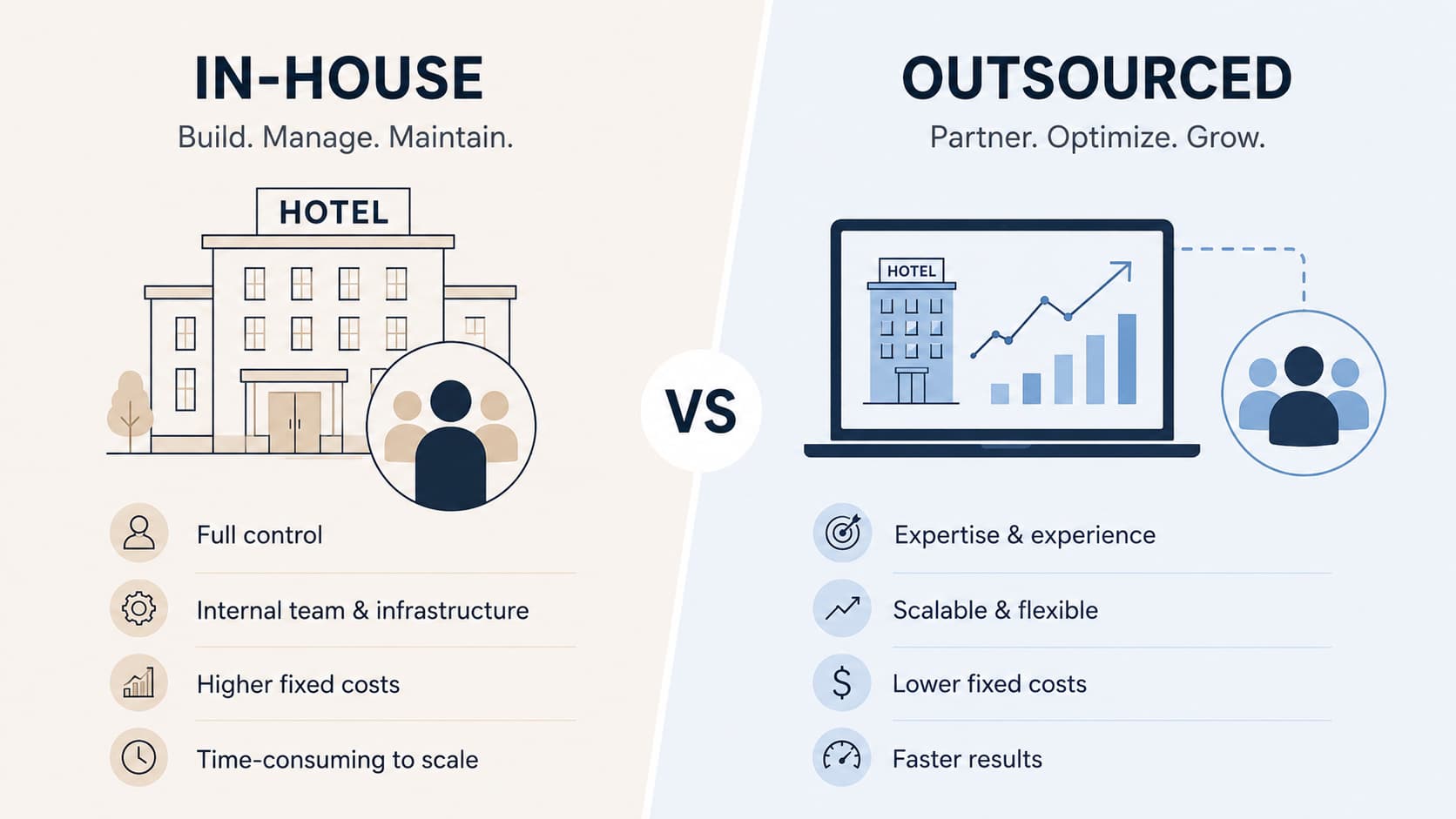


Key Takeaway: Stop treating all channels equally. Shifting just 15% of OTA bookings to direct channels can increase net operating income by up to 30%.
It was a Saturday night in October. A 42-room independent hotel in Jaipur had 18 rooms still unsold at 6 PM. The owner did what he always did: he dropped the rate by ₹500 and waited. By 9 PM, he had filled 12 more rooms. He went to bed feeling like he had won.
He hadn't. He had just sold 12 rooms for less than guests were already willing to pay.
Three kilometres away, a competing property (same star rating, slightly older rooms) had been quietly adjusting rates all week based on search demand, competitor movements, and local event signals. They filled their inventory two days earlier, at ₹900 more per room on average.
This is the gap dynamic pricing closes. And for hotels in India, that gap is widening every year.
The Cost of Static Pricing
For decades, hotel pricing was a one-time decision. You set a rack rate at the start of the season, offered a monsoon discount, negotiated a corporate rate, and called it done. Guests had no easy way to compare what forty other hotels were charging. Loyalty was built on familiarity, not algorithms.
That world is gone, and static pricing is the reason so many hotels in India are quietly haemorrhaging revenue they do not even know they are losing.
Today, a guest planning a weekend in Udaipur opens MakeMyTrip, Booking.com, and Google Hotels simultaneously. They compare your room against 40 others in under three minutes. They know your rate from last week. They know your competitor dropped their price this morning. When your pricing does not reflect the actual demand in the market, in real time, you are either leaving money on the table or watching bookings walk out the door.
Static pricing, at its core, is a bet that the market will stay still. It never does.
3 Ways to Identify Revenue Leakage
Most hotel owners sense that something is off. Occupancy looks decent, but profit feels thin. The culprit is almost always one of three silent leaks eroding revenue from the inside:
| Revenue Leak | What It Looks Like | Financial Impact |
|---|---|---|
| Unmanaged Rate Parity | OTAs undercut your direct price; guests skip your website | 20% disparity = lakhs in unnecessary OTA fees/year |
| Flat Seasonal Rates | Same rate on high-demand days as slow Tuesday | Every unsurged peak night = revenue permanently lost |
| Ignored Competitor Movement | Competitor drops rates and you hold steady | Appears overpriced vs product that's genuinely superior |
- Unmanaged Rate Parity: When OTAs undercut your direct price, guests stop booking through your website. You pay higher commissions on every booking, your direct channel weakens, and the guest relationship shifts from yours to the platform's. Over a full year, even a ₹200 disparity per room per night can cost a mid-size property lakhs in unnecessary OTA fees.
- Flat Seasonal Rates: Failing to yield during high-compression dates is the most expensive mistake in hotel revenue management. When your city hosts a major event and your rates stay unchanged, you fill at the same price you would on a slow Tuesday. Every unsurged peak night is revenue permanently lost.
- Ignored Competitor Movement: Not reacting when the hotel next door drops rates is just as dangerous as blindly following them down. When a competitor discounts aggressively and you do nothing, you may appear overpriced, even if your product is genuinely superior.
What Dynamic Pricing Actually Means
| Principle | What It Means | Key Tactic |
|---|---|---|
| Build rate fences, not random numbers | Explain why one guest pays more than another | Booking window, cancellation flexibility, length of stay |
| Read competitors without chasing them | Use rates as a demand thermometer, not a thermostat | Respond to market temperature, not the competitor's setting |
| React to demand signals early | Leverage signals before inventory loses value | Search volume, booking pace, event calendars, cancel patterns |
Dynamic pricing is not about constantly slashing rates to fill rooms. That is a race to the bottom, and it destroys margin. Real dynamic pricing means charging the right price, to the right guest, at the right moment - guided by what the data tells you demand actually is.
Done well, it is invisible to guests. Done poorly, it feels erratic and erodes trust. The difference lies in three core principles.
Principle One: Build Rate Fences, Not Random Numbers
The first mistake hotels make is treating dynamic pricing as a dial they turn up or down with no underlying logic. A rate fence is a clear, defensible rule that explains why one guest pays more than another for the same room type.
- Booking window: Guests who commit 21 or more days in advance earn a lower rate. Those booking within seven days pay your highest available rate.
- Cancellation flexibility: A fully refundable rate can legitimately sit ₹600–1,200 above a non-refundable one. The guest is paying for the option to change plans.
- Length of stay: A four-night guest brings more stable, lower-cost revenue. Rewarding longer stays with a modest discount improves both occupancy patterns and revenue per booking.
- Room category: Ensure pricing tiers move proportionally as demand rises. If your standard room climbs on a peak weekend, your deluxe should climb proportionately, not stay flat, which destroys the upsell opportunity.
Principle Two: Read Competitors Without Chasing Them
Competitor data is the most misused signal in hotel pricing. The instinct is simple: if the hotel down the road drops their rate, you drop yours. This is reactive pricing, and it compresses everyone's margins over time.
The smarter move is to read what competitor data is telling you about demand, then respond to the demand signal, not the rate itself. Use competitor rates as a thermometer, not a thermostat. They tell you how hot the market is; they should not control your settings automatically.
Principle Three: React to Demand Signals Early
By the time a Friday night is two days away, your leverage is gone. Demand signals, read early, let you act while inventory still has value. Key signals for hotels in India include:
- Search volume on OTAs: A spike in searches for your destination three weeks out is early demand forming. Tighten discounts before the rush makes it obvious.
- Booking pace: If you are 60% booked four weeks out and historically you reach that number two weeks out, demand is running ahead of pace.
- Local event calendars: Build an event calendar twelve months forward and pre-set rate adjustments for predictable demand spikes (fairs, matches, conferences).
- Your own cancellation patterns: An uptick in cancellations on a specific future date means rising net availability. Adjust before you fall behind.
What a Week of Dynamic Pricing Actually Looks Like
On Monday morning, the revenue lead reviews forward booking pace for the next 45 days. Demand for the upcoming long weekend looks ahead of last year's pace. Rates for Friday and Saturday are nudged up ₹700. The non-refundable fence is tightened.
By Wednesday, OTA search impressions for the city spike for a regional conference. Rates for those dates are adjusted upward, a minimum length-of-stay restriction is added, and the early-bird discount is removed.
On Thursday, a competitor drops rates sharply for Sunday. The hotel checks its own Sunday inventory: 74% booked, three weeks out, well ahead of pace. No adjustment made. The competitor's move is their problem, not a signal worth following into a margin cut.
The weekend closes with 91% occupancy and a RevPAR 22% above the same weekend last year.
Conclusion
The hotels winning on RevPAR across India's competitive OTA landscape are not necessarily the ones with the best rooms or the biggest marketing budgets. They are the ones who have stopped treating pricing as a number they set and forgotten, and started treating it as a strategy they manage continuously.
Dynamic pricing, at its core, is about respect: respect for what the market is telling you, respect for the guest's intelligence, and respect for the value your property genuinely delivers.
Start with two moves: build a booking-window rate fence this week, and schedule a 30-minute comp-set review every Monday. Those two habits will shift how your entire team thinks about revenue.
The room you sell tonight at the wrong price is revenue you can never recover. The room you price with intention is the foundation of a healthier, more profitable hotel.
Ready to build a dynamic pricing strategy tailored to your property? Grow Engine works with hotels across India to implement revenue management systems that fit your market, your guests, and your goals. Get in touch with us today.